HOMEOWNER GUIDE
Understanding Your Roofing Estimate
Published: September 15, 2026 Read Time: 8 min
A roofing estimate lands in your inbox and it is a page of terms you have never had reason to learn. Squares, underlayment, ice and water shield, recoverable depreciation. Most homeowners only go through this once or twice in a lifetime, so there is no reason you would already know what any of it means. This walks through what goes into a roof, what shows up on an estimate, and how the insurance side works when a storm is involved.
A Roof Is More Than Shingles
When people picture a roof they picture shingles, and that is understandable because shingles are the only part you can see. What actually sits up there is a system with several layers, and each one has a job. Underlayment, ice and water shield, flashing at every transition, drip edge along the perimeter, and ventilation moving air through the attic underneath all of it.
That matters for reading an estimate because most of that roofing work is invisible by the time the job is done. The shingles go on last and cover everything that came before them. A roof that was built carefully and a roof that was rushed can look identical from the driveway on the day the crew leaves.
So the estimate is where you actually see what you are buying. The more of that system is spelled out on the page, the clearer the picture you have.
What Shows Up on an Estimate
A detailed estimate reads like a description of the work rather than a single number. Here is what each line generally refers to.
The shingle by name. The manufacturer and the specific product line, since there is real range within the category. Wind rating, impact resistance, and warranty terms all vary from one line to the next.
Tear-off. Removing the existing roof down to the wood deck. This is what lets anyone see the condition of the decking underneath, which is not visible any other way. Our roof replacement page walks through the full sequence if you want the step-by-step.
Underlayment and ice protection. What kind, and where it goes. Ice and water shield at the eaves and in the valleys matters a great deal in this climate.
Flashing. The metal at chimneys, walls, and other transitions. These are the spots where water is most likely to find a way in, so the details here carry a lot of weight.
Ventilation. Intake at the soffits and exhaust at the ridge, working as a pair. Good airflow through the attic extends shingle life and helps with ice dams in the winter.
Decking terms. Nobody knows the condition of the wood until the old roof is off. A rate per sheet listed ahead of time means the number is already settled if any of it needs replacing.
Permit, disposal, and cleanup. Your city issues the permit, the old roof has to go somewhere, and the property gets swept afterward. All three are part of the project.
Both warranties. The manufacturer stands behind the materials and the contractor stands behind the installation. They are two separate things and both are worth having in writing.
How Roofers Actually Measure a Roof
Roofing is sold by the square, and a square is one hundred square feet of roof surface. Not floor space. The roof is bigger than the footprint of the house because it is angled, and the steeper it is the more surface there is.
Most homes around here land somewhere between twenty and forty squares. That figure alone does not tell you much, though, because two roofs of identical size can be very different jobs. Pitch is the big one. A steep roof needs staging, moves slower, and carries more risk for the crew. Then there is how cut up the roof is, meaning dormers, valleys, chimneys, skylights, and every spot where one section meets another. Those take time and they are where leaks start.
That is why an accurate measurement matters so much. Getting on the roof and measuring it section by section accounts for all of that, and it is the difference between an estimate that holds and one that shifts once the work starts. If you just want a rough starting point before anyone comes out, our instant quote tool measures your roof from aerial imagery in about thirty seconds.
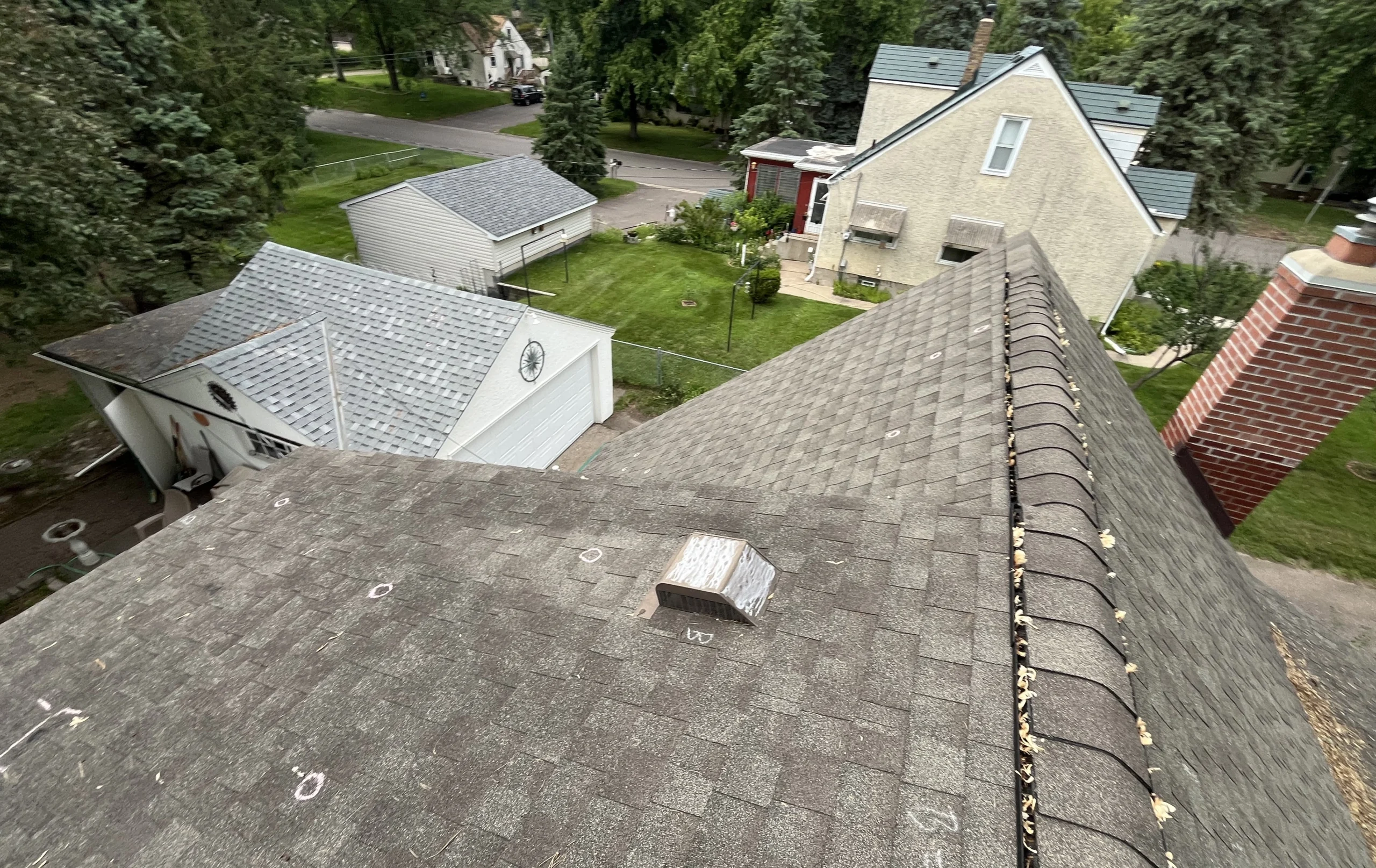
Not sure how much life your roof has left?
Our free inspection tells you where you actually stand. We climb up, take photos, and give you a straight answer with no pressure attached.
When Insurance Pays and When It Does Not
This is where most of the confusion lives, and the line is simpler than people expect. Insurance covers sudden damage from an event. It does not cover a roof that wore out.
Hail and wind are the two that come up most. Sudden storm damage is generally the kind of thing a claim is meant for, and a roof that has simply reached the end of its life generally is not. Your carrier makes that call based on your policy and what the adjuster finds, so nobody can promise you an outcome ahead of time.
Age and storm damage often sit on the same roof, and those get looked at case by case. The adjuster comes out and inspects it themselves, so what helps on your end is having your own record of what is up there and somebody on the roof alongside them who can point things out. Our storm damage page walks through how the process runs from the first inspection forward.
The Words Your Carrier Will Use
Insurance paperwork has its own vocabulary and none of it gets explained to you. A few worth knowing before you open the letter.
Actual cash value. What the roof is worth today, with age subtracted. This is usually the first check you receive and it will look smaller than the estimate.
Recoverable depreciation. On a replacement cost policy, the carrier may hold part of the money back up front and release it once the work is finished and the required paperwork is submitted. Whether any of it comes back, and how much, depends on how your policy is written. An actual cash value policy generally does not include that second payment at all.
Replacement cost value. The full amount to put a new roof up. Actual cash value plus recoverable depreciation adds up to this.
Supplement. When a contractor finds work or damage the original scope did not account for, they can document it and submit supporting estimates for you and your carrier to review. The carrier decides whether anything additional gets approved.
Deductible. The portion you are responsible for under your policy. It comes out of what the carrier pays, so it is part of the math from the start rather than a surprise at the end.
One thing worth saying about all of this: no two policies read the same. Coverage, deductibles, and how depreciation gets handled all vary from one carrier to the next, and sometimes from one policy to the next with the same company. It is worth a call to your agent before you assume anything, and worth reading the parts of your policy nobody enjoys reading.
Things That Differ Across the River
The work is the same on both sides of the St. Croix. The paperwork is not entirely.
Minnesota and Wisconsin license contractors separately, so a company working both states carries two licenses. Ask for the number that matches your state. Permits run through your individual city rather than the state, and requirements vary from one town to the next even within the same county.
The two states also handle storm restoration contracts somewhat differently, including the rules around insurance deductibles. We work both sides regularly and check the requirements for your specific city on every job rather than assuming, because they vary from one town to the next.
What Homeowners Ask Us
Should I get more than one estimate?
Most homeowners do, and it is a reasonable thing to want on a project this size. Two or three gives you a good sense of things. What helps most is having each one detailed enough that you can see what the work includes.
How long is an estimate good for?
Ask, because it varies. Material pricing moves, sometimes more than once a year, so a number from last spring may not hold. Any contractor should be able to tell you how long they will honor it.
What should I ask a contractor before hiring?
Where the company is based, how long they have been working in your area, and the license number for your state so you can look it up. It is also fair to ask how they handle decking(plywood on the roof) if they find soft spots, and what their workmanship warranty covers. Good questions get straight answers.
What if my estimate and my insurance scope do not match?
That happens often and it is not a sign anything went wrong. Adjusters work quickly, and scopes get written before anyone has been over the whole roof with a tape measure. The way it normally gets resolved is a supplement, where the additional work gets documented and supporting estimates go to the carrier for review. The carrier decides what it approves. We handle that paperwork for our customers, but the process is the same whoever does it.
How do I compare two estimates?
Line them up next to each other and look at the scope rather than the totals. Same shingle line, same underlayment, same approach to flashing and ventilation, same warranty terms. Once the work matches, the comparison is simple. When something reads differently, it is usually worth a quick call to ask what that line covers.
The Short Version
An estimate is a description of work, and the price is the last line of it rather than the whole story. Once you know what the layers are called and what each one does, the page stops being intimidating.
If you have questions about your roof or something on an estimate you do not understand, ask us. Our inspections are free, we will show you photos of what is actually up there, and there is nothing attached to it.
Not Sure What You Are Looking At? Bring It to Us.
Free inspection. Honest assessment. Calls answered. Promises kept. That's how Buildtec does business.