HOMEOWNER GUIDE
Should You Replace Your Siding at the Same Time as Your Roof?
Published: August 20, 2026 Read Time: 7 min
It usually comes up during a roof inspection. We are up on the ladder looking at shingles, and the homeowner asks about the siding while we are there. Sometimes the honest answer is yes, do them together. Sometimes it is absolutely not, and the siding has another decade in it. Here is how we think through that question, and how you can decide for your own home without anyone selling you something you do not need.
Why the Question Comes Up at All
Roofs and siding tend to age on similar timelines. A lot of homes in Minnesota and Wisconsin got their roof and siding done at the same time, either when the house was built or during a previous owner's big exterior project. Twenty-some years later, both are showing wear at once. That is not a coincidence, it is just the math.
Storms complicate it too. A hailstorm that damages your roof frequently damages siding on the same elevation, especially on the north and west faces where hail tends to hit hardest. Homeowners often discover the siding damage only after an inspector or adjuster points it out.
What You Actually Save by Combining Them
The savings are real, but they are not where most people assume. You are not getting a bulk discount on materials. Shingles cost what shingles cost. And the roof and siding are separate jobs with separate crews, usually a week or so apart, so it is not one crew knocking both out in an afternoon.
Where you save is in everything around the work itself.
One project instead of two. One estimate, one contract, one permit process, one point of contact. Ordering, scheduling, and coordination happen once rather than being repeated years later.
Transitions that get done right. This is the one people underestimate, and it is the strongest reason to combine. Where your roof meets a wall, where step flashing tucks behind siding, where kickout flashing sheds water away from the wall. When roofing and siding happen years apart under different companies, those junctions get compromised. When one company handles both back to back, they get built as one system.
Materials chosen together. Picking your shingle and your siding at the same time means you are choosing a combination rather than trying to match new siding to a roof color you settled on three years ago.
One stretch of disruption. Even with the jobs a week apart, you get it over with in one window rather than living through the whole thing again down the road.
When Doing Both Makes Sense
A few situations where we would tell you to seriously consider it:
Both are original and both are aging. If your roof is at twenty-plus years and your siding went on at the same time, replacing one and leaving the other usually means you are back at it again in a few years.
One storm damaged both. If hail or wind hit your roof and your siding in the same event, they belong in the same insurance claim. Splitting them into two claims years apart means two deductibles and a harder conversation with your carrier the second time.
There is water damage at a transition point. If a leak traced back to failed step flashing or a bad roof-to-wall detail, fixing the roof alone often does not solve it. That junction needs to be rebuilt properly from both sides.
You are changing the look of the house. If you want a different color scheme, doing both at once lets you pick a shingle and siding combination that actually works together instead of matching a new roof to siding you already dislike.
You are planning to sell in the next few years. A house with a new roof and new siding shows completely differently than one with a new roof and tired siding. Buyers notice.
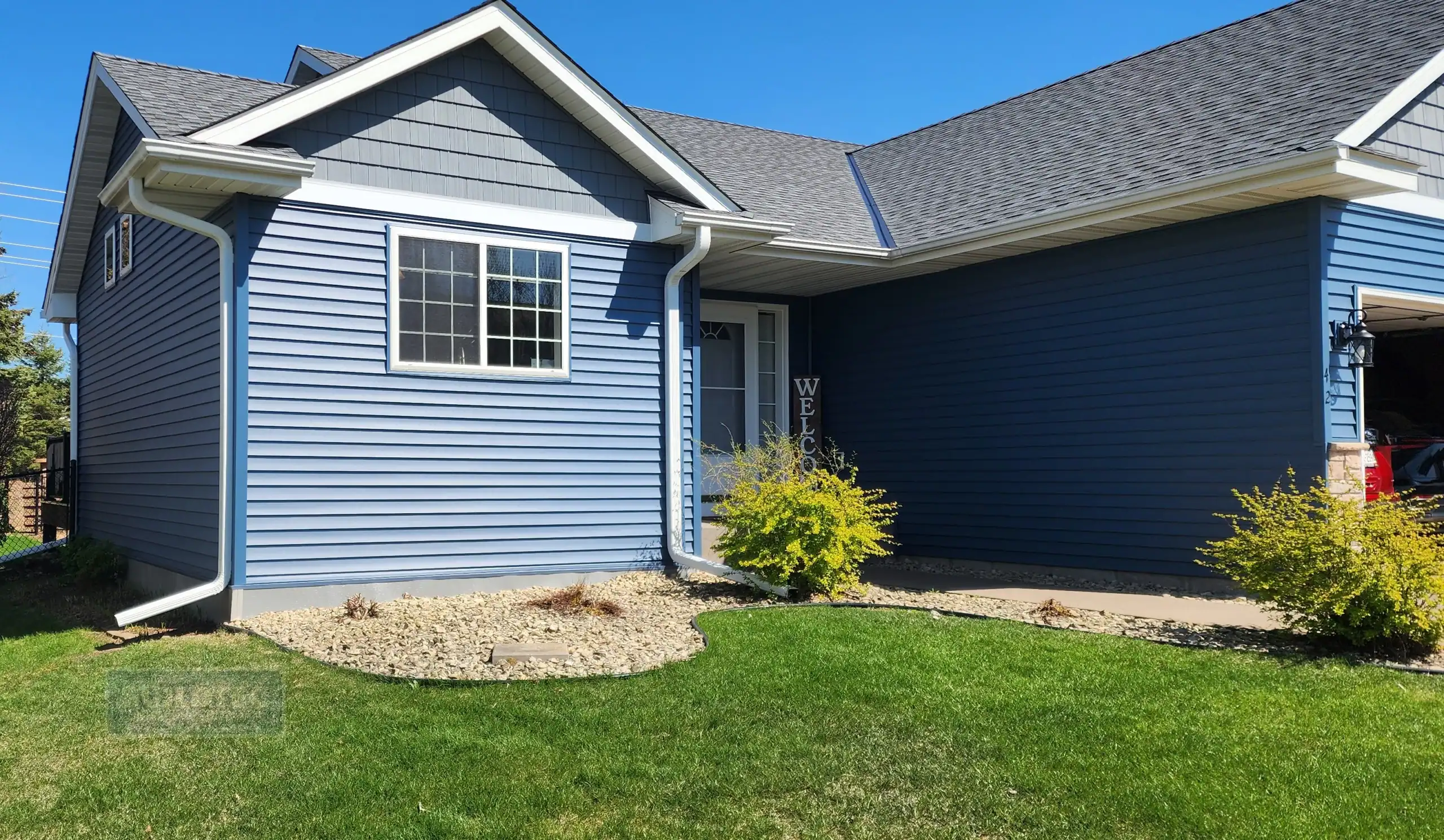
Not sure where your siding stands?
Our free inspection covers your whole exterior, not just the roof. We will tell you honestly if the siding can wait.
When You Should Just Do the Roof
Plenty of times we tell homeowners to hold off on siding, and we would rather say that than sell a project that does not need to happen.
Your siding is meaningfully newer. If the siding went on ten years ago and is in good shape, there is no reason to tear off material with fifteen or twenty years left in it.
The damage is isolated. A few damaged panels on one elevation is a repair, not a replacement. If we can source matching material, that is the smarter move.
The budget is tight and the roof is urgent. A failing roof is a water problem. Tired-but-functional siding is a cosmetic problem. If you have to choose, the roof comes first every time, and there is nothing wrong with doing siding in a few years.
Insurance covered one but not the other. If your carrier approved the roof and denied siding, and we do not believe there is legitimate siding damage to supplement for, we are not going to invent a reason for you to spend money.
How Insurance Handles It
This is where it gets worth having someone in your corner. When a storm damages both your roof and siding, both should be part of the same claim. What happens in practice is that adjusters sometimes scope the roof thoroughly and give the siding a quick look from the ground.
Siding tends to get less attention during a claim than the roof does. Everyone shows up focused on the shingles, and the elevations get a quicker pass on the way by. Damage that is genuinely there can end up outside the scope simply because nobody looked closely enough to write it down.
That is why we meet the adjuster on site rather than sending photos afterward. We walk both the roof and the elevations together, and if damage gets left out of the scope, we file a supplement with documentation. You should not have to argue with your insurance company about what is on your own house. More on how that process works on our storm damage page.
What the Project Actually Looks Like
The roof goes first. There is a practical reason for that: roofing work drops debris, and you do not want tear-off landing on brand new siding.
These are two separate jobs with two different crews. Most residential roofs finish in one to two days. The siding crew typically comes back the following week, and that side of the work usually takes several days to a week depending on the size of the home and the material. So you are looking at two separate stretches of activity rather than one continuous run.
What ties them together is that the same company is handling both. The siding crew knows exactly how the roof was flashed because it was our roof, and the transition details get built as one system instead of one crew inheriting whatever the last one left behind.
You get one written estimate covering both, with materials, labor, and the schedule for each phase spelled out before anything starts.
Questions Homeowners Ask Us
If I do the roof now and siding in a few years, is that a problem?
Plenty of homeowners go that route. Just know that the step flashing and kickout flashing at your roof-to-wall transitions will need to be redone when the siding goes on, and whoever installs it has to understand what they are tying into. If we did your roof, we already know. If someone else did, expect a closer look at those junctions before the siding work starts.
Does one storm claim cover both, or is that two deductibles?
Yes. One storm is one claim, and that claim covers everything the storm damaged, roof and siding both. You pay one deductible, not two. That is a good reason to have someone look at the whole exterior rather than just the part you noticed.
Can I finance a combined project?
Yes. Larger combined projects are one of the more common reasons homeowners use financing, and you can see your options without affecting your credit score. Details are on our financing page.
How can I tell if my siding has storm damage?
It is easy to overlook, which is most of the problem. Hail damage on vinyl shows up as small cracks, chips, or holes, and it often only reads clearly from certain angles or in certain light. Wind damage is a little easier to catch, usually loose or pulled panels along one elevation. The simplest rule of thumb: if your roof took a hit, the siding on that same side of the house probably did too. That is worth having someone look at up close before you assume it is fine.
The Short Version
If your roof and siding are both aging out, or if one storm damaged both, doing them together saves money and produces a better result at the places where they meet. If your siding has real life left in it, do the roof and revisit siding when it is actually time.
The only way to know which situation you are in is to have someone look at both. Our free inspection covers the entire exterior, and we will tell you plainly if the siding can wait. That answer costs you nothing and we would rather give it than sell you a project you do not need.
Wondering What Your Home Needs? Let's Take a Look.
Free inspection. Honest assessment. Calls answered. Promises kept. That's how Buildtec does business.