

AREA GUIDE
Roofing in the St. Croix River Valley: Town-by-Town Guide

Published: July 30, 2026 Read Time: 8 min
The St. Croix River Valley isn't like the rest of the Twin Cities metro. It's a string of small river towns, bluff-top neighborhoods, century-old homes, and newer builds tucked into the woods, spread across two states and connected by one river. Buildtec has been working up and down this valley since 2006, and the roofs here have their own quirks. This is a town-by-town look at the valley we call home, what makes each stretch different, and what valley homeowners should know about taking care of their roofs.
Why the Valley Is Its Own Kind of Roofing Market
Drive the length of the St. Croix and you'll notice something. The homes change every few miles. Riverfront cottages sitting low near the water. Bluff-top homes catching every bit of wind that comes down the valley. Historic downtowns with buildings that predate Minnesota statehood. Newer subdivisions carved into wooded lots up on the ridge.
That variety matters for roofing. A cottage down on the flats near the water deals with humidity and shade from mature trees, which means moss and algae growth. A bluff-top home takes wind that a house three blocks inland never feels. A 130-year-old Stillwater home might have a steep slate-style pitch and details that need a roofer who's worked on old buildings before.
Then there's the weather. The river valley funnels wind. Storms that track along the St. Croix can hit harder and more unpredictably than the same system does out on flatter ground. Add Minnesota and Wisconsin winters, ice dams, and summer hail, and you've got a corridor where the quality of a roof install shows up faster than it does elsewhere.
The Southern Valley: Afton to Lakeland
Start at the southern end and the valley feels almost rural. Afton is the anchor here, a small town with a historic main street, a state park, and homes ranging from riverfront cabins to larger properties spread across wooded acreage up the bluff. Afton homes often have steeper, more complex rooflines, and many sit under heavy tree cover, which means more debris in the valleys and more shade holding moisture on the north-facing slopes.
Just north sits a cluster of small river communities that a lot of people outside the valley have never heard of. St. Mary's Point is tiny, tucked right against the water with a mix of older cottages and updated year-round homes. Lake St. Croix Beach and Lakeland follow the same pattern: modest lot sizes, homes close to the river, and a lot of properties that started as seasonal cabins before becoming full-time residences.
What those beach towns share is roofing challenges tied to being close to the water. Higher humidity. Mature trees dropping debris. Older homes that have been added onto over the decades, which often means multiple roofing systems tied together in ways that need careful flashing work. If you own in this stretch, the flashing details and ventilation matter as much as the shingles themselves.
The Heart of the Valley: Bayport, Oak Park Heights, and Stillwater
Bayport sits right on the water with a mix of historic homes, the Andersen campus, and quiet residential streets. A lot of Bayport homes date back decades and carry the roofing details that come with age: older decking, previous layers, and flashing work that may not have been done to today's standards.
Oak Park Heights blends into Bayport and Stillwater almost seamlessly. Established neighborhoods off Norell, the Boutwells Landing community, and newer development filling in around HWY 36. The housing stock skews a bit newer here than in Bayport or downtown Stillwater, which means a lot of these roofs are hitting their first or second replacement right about now.
Stillwater is the biggest name in the valley and the most varied. Historic homes on the hill with steep pitches and intricate rooflines. Downtown buildings dating to the lumber era. Newer neighborhoods up by the high school and out toward Highway 36. A Stillwater roof project can mean anything from a straightforward rambler tear-off to a complex historic home where every valley, dormer, and chimney needs individual attention.
This is also where Buildtec is based, so this stretch of the valley is where you'll see our trucks most often. Working in your own hometown means your reputation is on the line with every project, which is a good way to keep standards high.
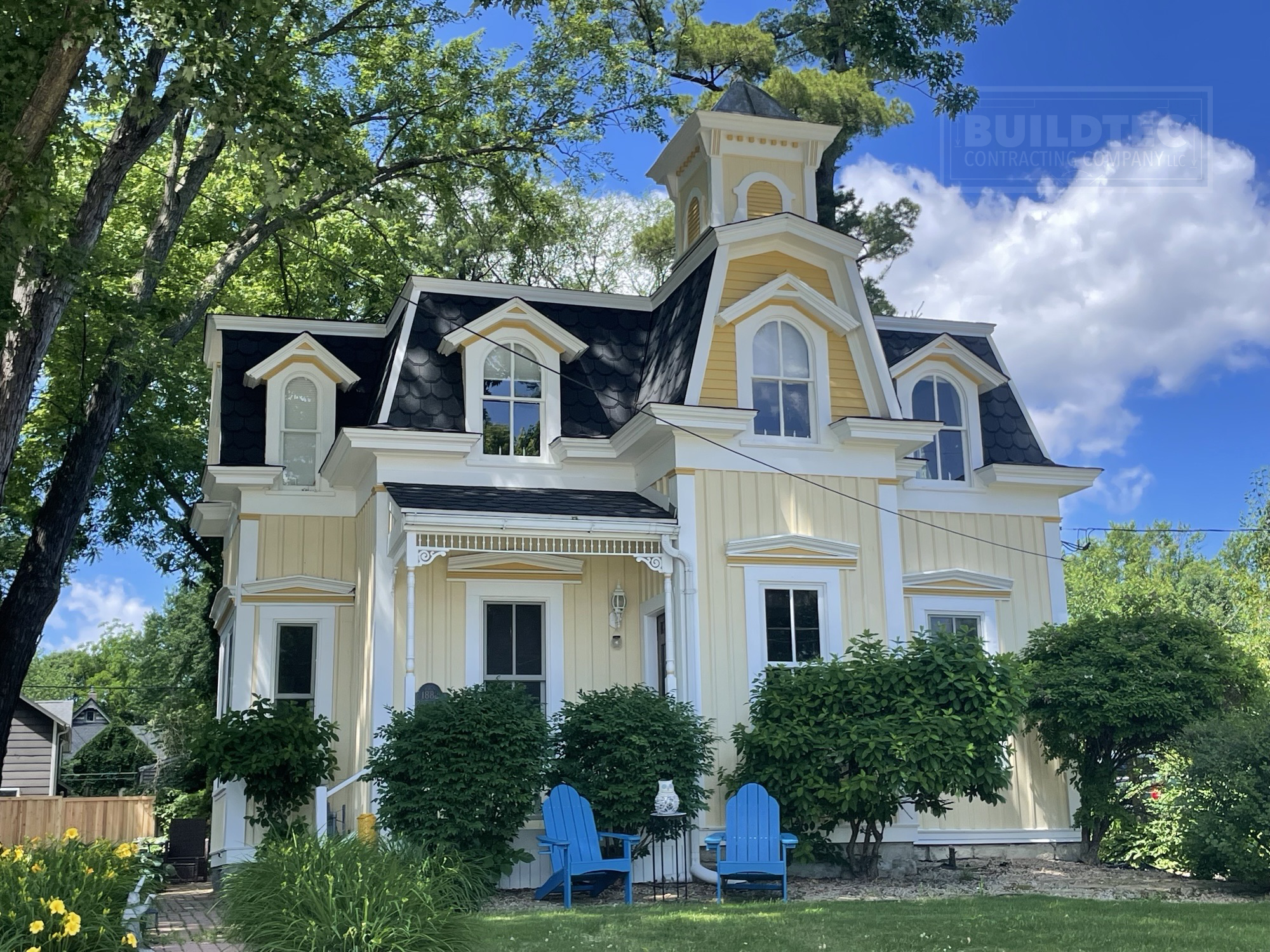
Own a home somewhere in the valley?
Buildtec provides free roof inspections up and down the St. Croix on both sides of the river. We climb up, document what we find, and give you a straight answer.
North of Stillwater: Arcola and Marine on St. Croix
Head north out of Stillwater and the valley gets quieter fast. Arcola is more of a place than a town, known for the Arcola Mills historic site and the high bridge, with homes scattered across large wooded lots along the river road. Properties out here tend to be larger, more private, and often sit under significant tree cover.
Marine on St. Croix is one of the oldest settlements in Minnesota and it looks the part. A tiny historic downtown, homes dating back to the 1800s, and a community that takes preservation seriously. Roofing in Marine often means working on older structures where the roof has to look right for the home's era while still performing to modern standards.
The common thread north of Stillwater is trees and distance. Heavy tree cover means more debris, more shade, more moss on north-facing slopes, and more risk from falling branches during storms. And because these communities are spread out, a lot of contractors won't bother making the drive. That's part of why homeowners up here tend to stick with a roofer they trust once they find one.
Across the River: The Wisconsin Side
The valley doesn't stop at the state line. Cross any of the bridges and you're into a whole other set of river communities, and Buildtec is licensed to work on that side too.
Houlton sits right across from Stillwater at the base of the bluff, a small community with a mix of older river homes and newer builds climbing the hillside. Somerset is a few miles inland, known for the Apple River and a growing residential base as more Twin Cities families move east.
Hudson is the biggest city on the Wisconsin side of the valley and one of our most active service areas. Historic homes in the Third Street district, established neighborhoods up the hill, and steady new construction as the city grows. North Hudson hugs the water just above it with a tight-knit residential feel and a lot of older homes.
Further north, Osceola and St. Croix Falls anchor the upper Wisconsin valley. Both are small river towns with historic downtowns, bluff-top homes, and the same mix of century-old housing stock and newer builds you see on the Minnesota side. And both take the same weather the valley delivers to everyone.
Working both sides of the river means holding licenses in both states. Buildtec carries a full Wisconsin contractor license alongside our Minnesota license, so a project in Hudson or Osceola gets handled exactly the same way as one in Stillwater or Afton.
What Valley Roofs Deal With That Others Don't
A few things show up more often on St. Croix Valley roofs than they do on a typical suburban home out in the metro:
Wind funneling. The valley channels wind. Bluff-top and exposed riverfront homes take gusts that inland homes don't see, which puts real stress on shingle adhesion and ridge caps.
Heavy tree cover. Beautiful, but it means debris collecting in valleys, moss and algae on shaded slopes, and branch damage during storms. Gutters fill faster here too.
Century-Old Homes. Historic homes in Stillwater, Marine, Bayport, and the Wisconsin river towns often have complex rooflines, previous layers, and decking that's seen a century of Minnesota weather.
Moisture and humidity. Homes close to the water deal with more moisture, which makes proper attic ventilation more important than a lot of homeowners realize.
Storms that track the river. Severe weather often follows the valley. A hailstorm can hit Afton and Lakeland hard and barely touch a town ten miles inland.
Knowing When It's Time to Repair or Replace
Plenty of roof problems in the valley can be fixed without a full tear-off. The trick is knowing which ones. Here's how we think about it when we're standing on your roof:
A repair usually does the job when the roof still has years left in it and the trouble is isolated to one spot. A branch came down and took out a section of shingles. Flashing pulled away from a chimney. A pipe boot cracked and started letting water through. If the rest of the roof is sound, there's no reason to replace what's still working.
Replacement tends to be the better call when the roof has age on it, the wear shows up in more than one area, or a storm did enough damage that patching would just be delaying the inevitable. Valley homes add a wrinkle here too. A lot of older properties in Stillwater, Bayport, Marine, and the river towns have been roofed over more than once. Once you're dealing with previous layers, a tear-off is almost always the smarter path because it lets us actually see and fix the decking underneath.
One more thing worth knowing if insurance is in the picture. Most policies and building codes won't let a contractor patch a roof section once damage passes a certain threshold, usually around a quarter of the shingles on that slope. Blending new shingles into an aging roof isn't allowed in those cases, and it wouldn't look right anyway. A roofer who works this area regularly can tell you pretty quickly which side of that line you're on.
Why a Roofer Is Worth Finding
After any significant storm rolls through the valley, out-of-town contractors show up in force. Door knockers. Flyers. Trucks with plates from states nowhere near here. Some of them are legitimate operations. Most of them will be gone by the following spring.
That matters more than it might seem. A roofing warranty is only worth something if the company that installed your roof is still reachable when you need them. Five or ten years down the line, when something needs attention, you want a phone number that still connects to a real person. We back all of ours with a lifetime workmanship warranty.
There's also the practical knowledge that comes from working an area for years. Knowing which Stillwater neighborhoods have homes with previous layers. Knowing how the wind hits a bluff-top house in Afton differently than a sheltered lot in Marine. Knowing the permitting process in both Minnesota and Wisconsin. That's not something a crew passing through picks up.
Buildtec has been a family-owned company in this valley since 2006. We're licensed in both states, we live here, and our trucks are on these roads every week. We're the ones you can still call in ten years.
Questions Homeowners Ask Us
Do you work on both sides of the river?
Yes. Buildtec holds a full Minnesota license and a full Wisconsin contractor license, so we handle projects on either side of the St. Croix. A roof in Hudson or Osceola gets the same crews, the same standards, and the same warranty as a roof in Stillwater or Afton.
Do you take projects in the smaller river towns?
Absolutely. St. Mary's Point, Lake St. Croix Beach, Lakeland, Arcola, Marine on St. Croix, Houlton, North Hudson. The small communities are part of the valley and part of our service area. Being local means we don't skip a town because it's small.
My home is over 100 years old. Can you work on it?
Yes. Historic homes are common throughout the valley and we've worked on plenty of them. Older homes often need more careful attention to flashing, decking condition, and roofline details, and we account for that in the inspection and the estimate before any work starts.
How do storms in the valley affect insurance claims?
Storms that track the river can cause damage in one town and skip the next, which sometimes means carriers are slower to recognize a claim in a smaller community. That's where documentation matters. We inspect, photograph everything, meet your adjuster on-site, and file supplements when something gets missed. See our storm damage page for more.
The Valley Is Home
From Afton up through the beach towns, past Bayport and Oak Park Heights, through Stillwater and out to Arcola and Marine, then across the bridges to Houlton, Hudson, Somerset, Osceola, and St. Croix Falls. This corridor is where Buildtec started and where we've built our reputation one roof at a time since 2006. We work and live in the St. Croix River Valley, so when we're on your roof, we're taking care of our neighbors. These are our communities too, and we treat every home like it's right next door to ours.
If you own a home anywhere along the St. Croix, whether it's a riverfront cottage, a bluff-top build, or a historic downtown house that's been standing since before statehood, we'd be glad to take a look at your roof. Free inspection, honest assessment, and a Lifetime Workmanship Warranty behind every install.
Own a Home Along the St. Croix? Let's Take a Look.
Free inspection. Honest assessment. Calls answered. Promises kept. That's how Buildtec does business.